Sweetness is easy to deliver. It requires no restraint, no structural thinking, and no particular understanding of what the palate does after the first bite. What Singapore’s café culture has built over the past decade is something more exacting than a preference for sweet things. It is a trained expectation for finish, balance, and texture that persists well beyond the initial mouthful.
That expectation now shapes how cheesecake is evaluated here. Sweetness alone no longer functions as a sufficient measure of quality. This article examines why that shift occurred, what Singapore’s café culture actually demands, and what it means for the cheesecakes that earn sustained attention.
How Singapore Developed One of the Region’s Most Discerning Palates
Singapore’s food culture is not a single tradition. It draws from Cantonese, Hokkien, Malay, Indian, and Western culinary histories, all compressed into a population with consistent access to high-quality ingredients and a dense concentration of food options.
This compression has produced a palate that is comparative by habit. Singaporeans assess food in relation to other food. A dish that is merely adequate reads as insufficient when a better version is available within walking distance.
The café wave that began in the early 2010s accelerated this tendency. Specialty coffee introduced the concept of tasting notes, origin differentiation, and preparation method as variables worth caring about. The people who built that café culture brought the same analytical approach to the food they served alongside their coffee.
Why Coffee Culture Changed Dessert Expectations
A café that serves a well-calibrated pour-over cannot serve a one-dimensional dessert without creating an inconsistency in the overall experience. The discernment applied to the coffee extends to the plate.
This is not merely an aesthetic concern. It is a structural one. A dessert that reads as overly sweet creates palate fatigue. It competes with the finish of the coffee rather than complementing it. Regulars who drink coffee without sugar notice this immediately.
The result is that cafés in Singapore, particularly those operating in the specialty coffee segment, began selecting or developing desserts with more considered flavour profiles. Sweetness became one variable among several, rather than the defining measure of quality.
What "More Than Sweetness" Actually Means on the Palate

A soybean cheesecake is a dessert that uses soy-derived ingredients, most commonly tofu or soya bean milk, as the primary base in place of cream cheese. The result is a cake with lower saturated fat, a softer density profile, and a cleaner finish on the palate.
The phrase is used loosely in food writing. It is worth being specific about what it describes in practice.
A dessert that offers more than sweetness delivers a sequence of sensations rather than a single note. There is an initial flavour, a mid-palate development, and a finish. Each stage may carry different qualities: acidity, bitterness, umami, or textural contrast. The experience extends across time rather than landing in a single moment.
For cheesecake specifically, this means the following elements come into play.
Acidity as a Structural Element
Well-constructed cheesecake uses acidity to create balance. The slight tang from fermented dairy, or from the natural composition of the filling, cuts through the sweetness and prevents the palate from becoming overwhelmed.
Without that acidity, a cheesecake reads as dense and one-directional. The finish lingers as sweetness without resolution. For a palate accustomed to balance, this registers as a flaw rather than a feature.
Density and Palate Weight
A cheesecake that is too dense leaves a heavy finish. The palate carries the sensation of the filling long after the final bite. In a café context, where the dessert is often consumed alongside or following a beverage, this heaviness works against the experience.
A lighter density profile, achieved through careful calibration of the filling composition and baking process, produces a finish that clears from the palate more cleanly. This is not about reducing flavour. It is about how the flavour resolves.
Textural Consistency Across the Slice
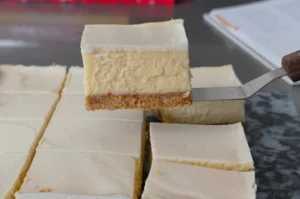
Texture is not a single quality in a cheesecake. It includes the resistance on the fork, the way the filling breaks apart under pressure, the smoothness of the cross-section, and the feel of the filling as it is consumed.
A filling that is consistent in texture from edge to centre reads as more considered than one that varies significantly between the outer and inner layers. Singapore’s café audience, which has encountered a wide range of cheesecake textures, can distinguish between these qualities. Inconsistency in texture is noticed even when it is not articulated as such.
The Role of Restraint in a Market Saturated With Options
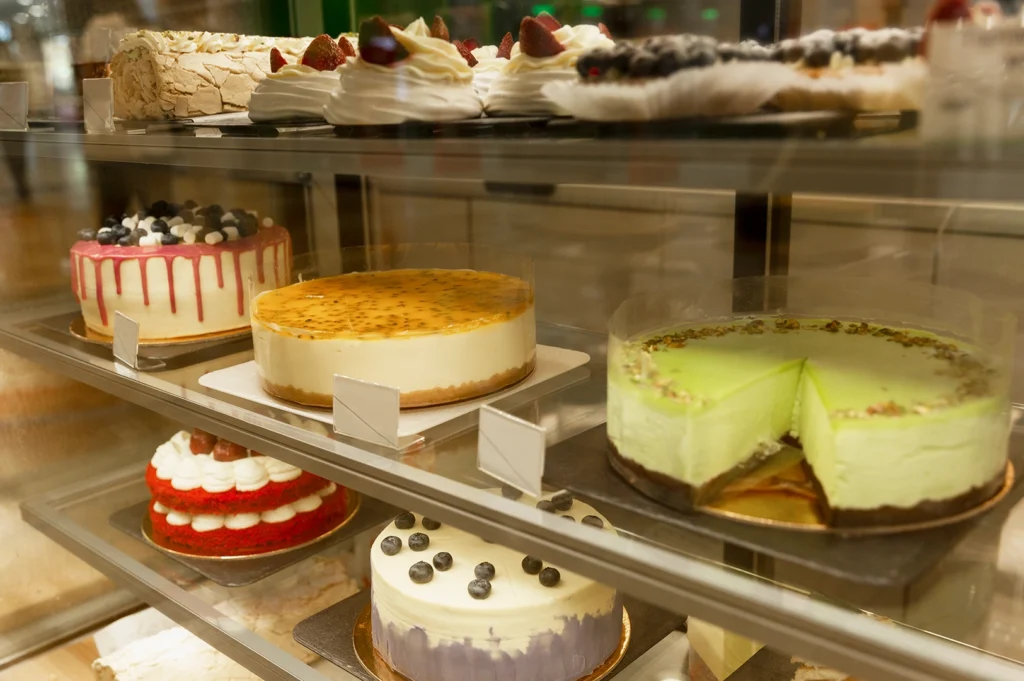
Singapore’s dessert market is not short of offerings. Cheesecake appears in multiple formats, from large-format whole cakes sold for occasions to individually portioned slices served in cafés. The range of sweetness levels, textures, and flavour profiles is wide.
In a saturated market, restraint functions as differentiation. A cheesecake that is not trying to be the loudest or the sweetest option on the table is making a deliberate statement. That restraint communicates confidence in the structural quality of the product.
This is the direction that Singapore’s café culture has been moving toward. The cafés that have built the most durable reputations are not those that maximised sensory impact. They are those that offered a consistent, considered product that rewarded repeat visits.
Repeat Visits Require Balance, Not Intensity
A dessert calibrated at maximum sweetness or richness tends to be a single-occasion experience. The palate remembers it as intense. Returning to it requires a certain kind of appetite that is not always present.
A dessert calibrated for balance is easier to return to. The palate does not experience it as a commitment. It functions as a complement to a coffee, a pause in an afternoon, or a quiet conclusion to a meal. This is the kind of product that builds regular customers rather than one-time visitors.
What Soy Brings to This Equation
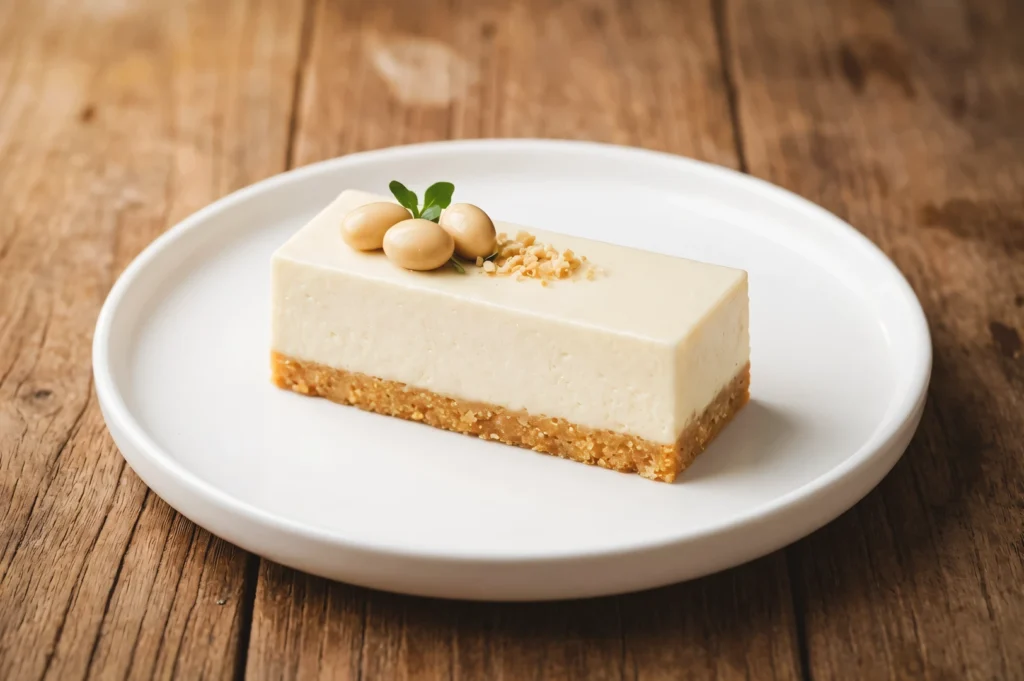
The use of soy in cheesecake is directly relevant to this discussion because soy addresses several of the qualities that Singapore’s café culture has come to expect.
Soy solids contribute a mild, savoury undertone that reduces the overall sweetness of the filling without the need for additional acidic components. This creates a more naturally balanced flavour profile across the slice.
The density profile of a well-made soy cheesecake tends toward lighter than a conventional dairy-heavy formulation. The palate weight is more manageable, and the finish clears more cleanly. For a market that prizes balance, this is a meaningful structural difference.
Soy also interacts differently with baking heat than dairy proteins. When handled correctly, it produces a finer, more even texture across the filling. The cross-section is smooth and consistent rather than variable.
Soy Is Not a Compromise
There is a tendency to frame ingredient substitution in desserts as a reduction in quality. With soy in cheesecake, this framing is inaccurate. Soy does not produce a lesser product. It produces a different structural outcome, one that, in the context of what Singapore’s café culture now expects, is often a more appropriate one.
The question is not whether soy can match dairy. The question is whether the textural and flavour outcomes that soy enables are well-suited to the current expectations of the market. For balance, lightness, and a clean finish, the answer is straightforwardly yes.
Meeting the Standard That Singapore's Café Culture Has Set
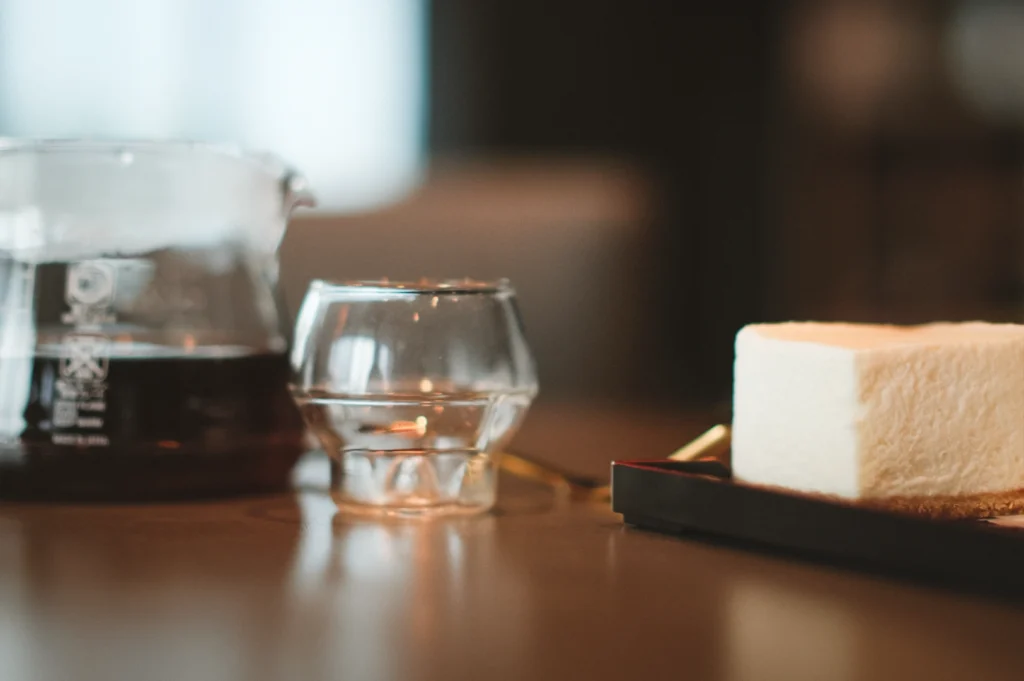
Singapore’s café culture demands a specific kind of cheesecake: one that balances sweetness with structure, offers consistent texture, and finishes cleanly. These are measurable qualities we use to calibrate, test, and maintain our products.
At Daizu by Ki-setsu, this is the standard we work toward to create the best cheesecake in Singapore. Our soy cheesecake is developed with the café context in mind: a product that complements a beverage, rewards repeated consumption, and feels considered rather than maximised. Singapore’s café culture demands more than just sweetness. Our approach is built on that premise.