Place a fork into a well-baked soy cheesecake and the resistance tells a story. Too little time in the oven, and the centre gives way without structure. Too much, and the texture compresses into something closer to a terrine than a dessert. Baking time is not simply a number on a recipe. It is the variable that determines everything the palate encounters.
This article examines how baking time shapes the texture of Japanese-style soy cheesecake, what a fork actually reveals about internal structure, and why understanding this relationship produces a more consistent, intentional result.
What the Fork Is Actually Measuring
When a fork presses into a cheesecake, it is not measuring softness in isolation. It is reading the relationship between three structural components: the set protein matrix, the moisture content retained within the bake, and the density of the filling.
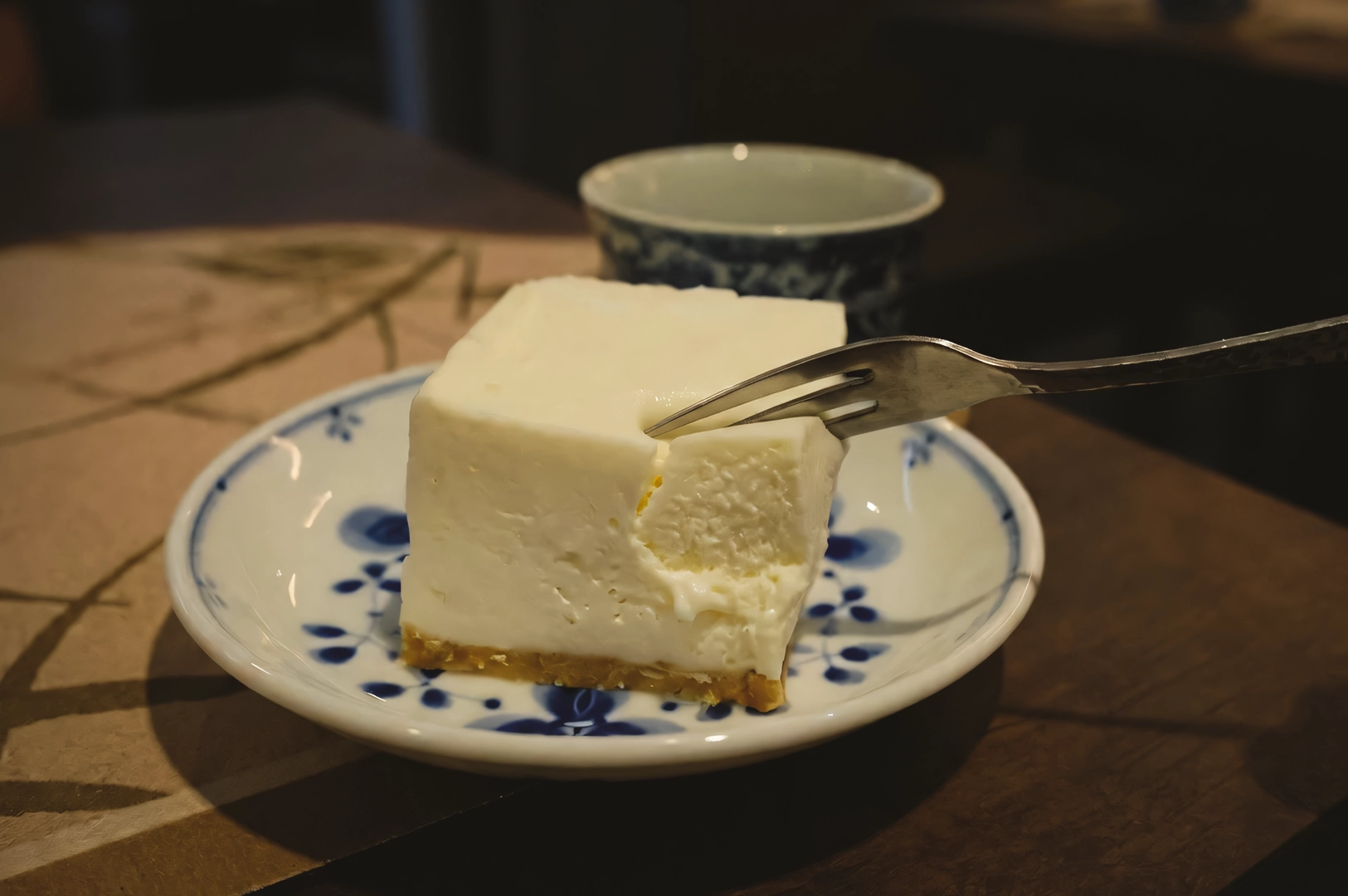
A fork that glides in with minimal resistance, then holds its shape when withdrawn, indicates a filling that has reached its target texture. The proteins have set. The moisture is distributed evenly. The structure supports itself without collapsing.
A fork that sinks without resistance and leaves a pooled indent suggests underbaking. The protein matrix has not fully formed. Moisture is still dispersed unevenly through the filling, and the structure cannot hold its shape under pressure.
A fork that meets firm, dry resistance throughout suggests overbaking. The moisture has evaporated beyond the intended level, and the filling has tightened into a denser profile than the recipe intended.
How Baking Time Shapes Internal Structure
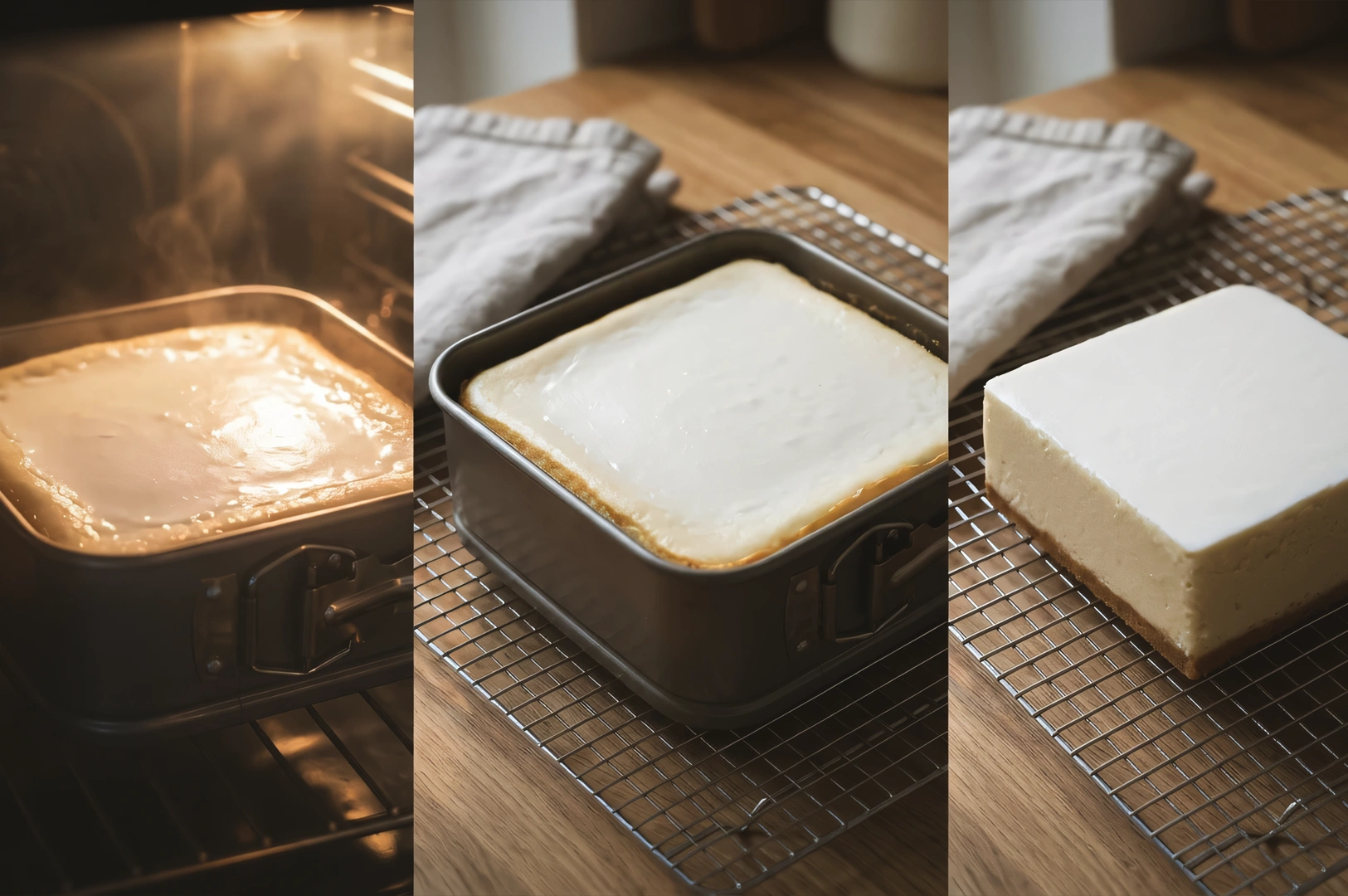
Baking is a delicate balance of time, temperature, and technique, and each factor plays a crucial role in determining the final texture and structure of a baked good. Understanding how baking time interacts with the internal composition is essential for achieving the perfect result, whether aiming for a soft and tender crumb or a firm and structured filling.
The Early Stage: Setting the Base
In the first phase of baking, heat travels inward from the edges of the pan. The outer portions of the filling begin to firm as proteins coagulate and moisture redistributes toward the centre.
At this stage, the centre of the cheesecake remains largely liquid. This is expected. Pulling the bake too early, because the outer surface looks set, is one of the most common errors in cheesecake preparation.
The outer surface is always ahead of the centre. Visual cues from the surface are unreliable guides to internal doneness.
The Middle Stage: The Jiggle Window
There is a specific window during baking when the cheesecake will exhibit what bakers call a “controlled jiggle.” The outer two-thirds of the filling is set and does not move when the pan is gently shifted. The centre third moves as a single, cohesive mass rather than as a liquid.
This unified movement is the structural signal that the internal protein matrix has largely formed, even if the centre has not fully set. It is the point at which the residual heat from the pan and the filling itself will complete the bake during cooling.
Pulling the cheesecake at this stage produces a flowing, custardy centre. Leaving it beyond this stage begins the transition toward a firmer, more uniform density profile throughout.
The Final Stage: Setting the Centre
As baking continues past the jiggle window, the centre loses its movement. The filling becomes uniform in its resistance across the entire surface. The top may begin to show very slight cracking at the edges, which indicates that moisture at the surface has evaporated faster than the interior can compensate.
A cheesecake pulled at this stage will have a firmer, more composed texture throughout. There will be less distinction between the outer and inner layers once the bake has cooled completely.
Temperature and Its Role in Texture
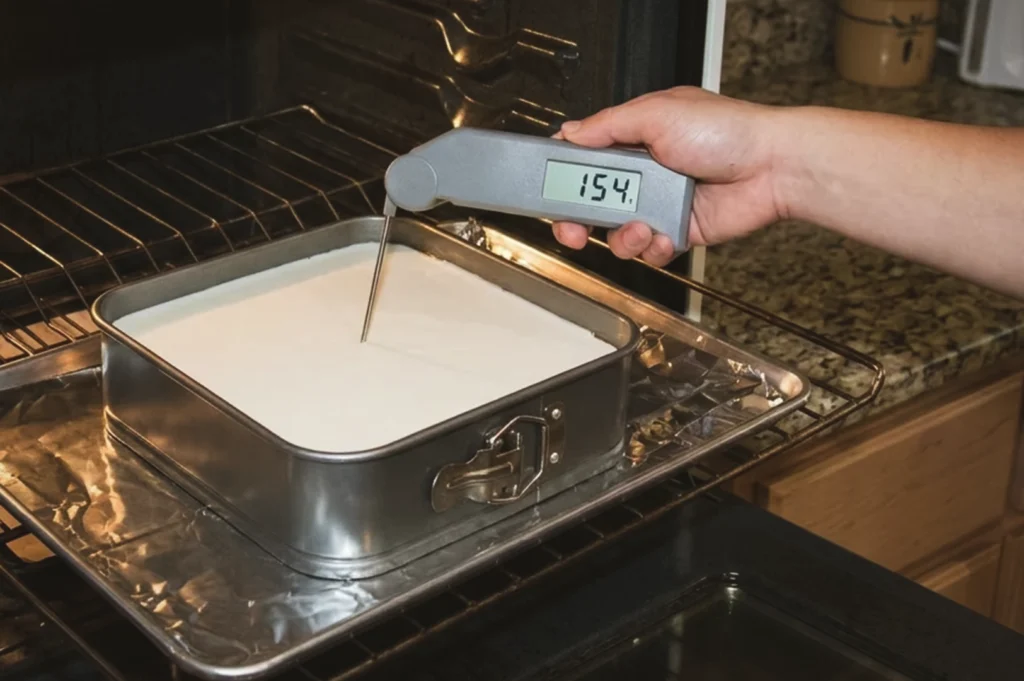
Baking time does not exist independently of temperature. The same baking duration at two different oven temperatures will produce measurably different textures.
Lower temperatures, typically in the range of 150 to 160 degrees Celsius, allow heat to penetrate the filling more gradually. This slower process gives the protein matrix time to set without expelling moisture rapidly. The result is a texture with higher retained moisture, a smoother finish, and a more cohesive density profile.
Higher temperatures accelerate surface setting but can create a temperature differential between the outer and inner layers. The edges firm before the centre has time to stabilise, which can result in an uneven texture and greater cracking.
Most Japanese-style soy cheesecakes are baked at lower temperatures, often using a water bath method, precisely because the soy content requires more controlled heat application to reach the intended textural outcome.
The Role of the Water Bath
A water bath, or bain-marie, surrounds the baking pan with hot water during the bake. This moderates the temperature around the sides of the pan and slows the rate at which the outer filling sets.
For soy cheesecakes, this matters. Soy solids have a different thermal response than dairy proteins. They can tighten more abruptly under direct heat. The water bath functions as a buffer, producing a more even set across the filling from edge to centre.
Removing the water bath from the process, even with adjusted baking times, typically produces a denser outer layer and a texture that reads as less uniform on the fork.
Cooling Time as an Extension of Baking
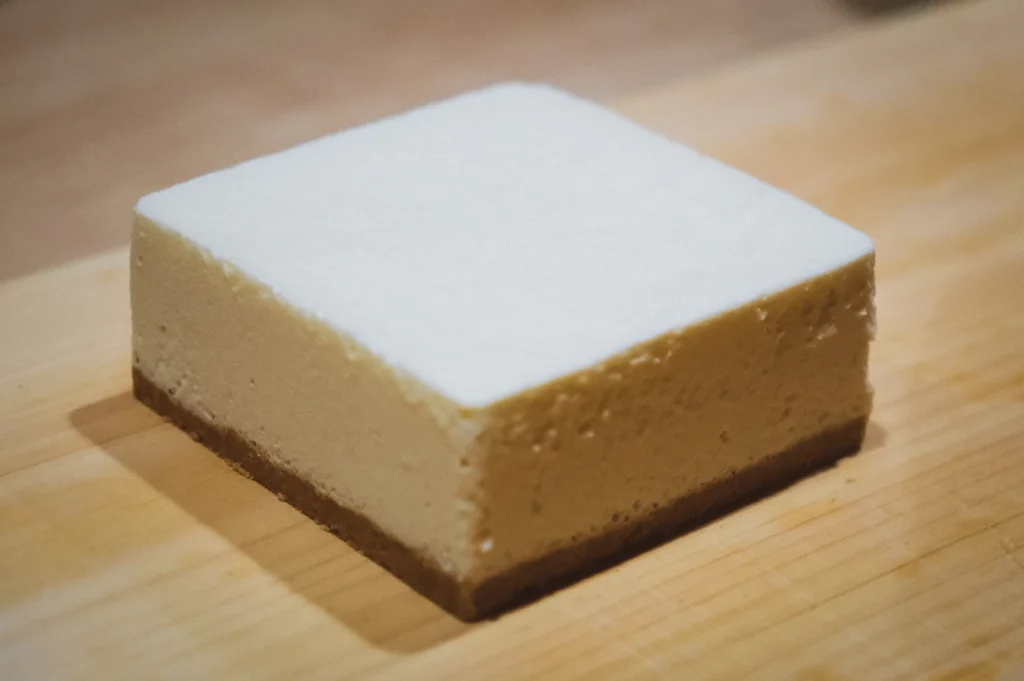
Baking time in the conventional sense ends when the cheesecake leaves the oven. But the setting process continues.
A cheesecake pulled from the oven still carries substantial heat, particularly at its core. As that heat dissipates during cooling, the filling continues to firm. The residual heat from the pan contributes to this process, particularly in the first thirty minutes after the oven door closes.
Cutting into a soy cheesecake before it has cooled fully is the equivalent of cutting it before the bake has completed. The internal structure has not had time to stabilise. The fork will encounter a texture that does not reflect the final baked result.
A proper cooling sequence includes gradual cooling in the oven with the door slightly open, followed by room temperature rest, then refrigeration. Each stage allows the texture to stabilise in a controlled way.
Refrigeration does not simply preserve the cheesecake. It is the stage at which the final texture is set. A cheesecake assessed before refrigeration will read differently on the fork than one assessed after a full chill period.
Reading the Fork: A Practical Reference
The fork provides four distinct readings depending on where the bake sits in the spectrum.
Underbaked: The fork meets no resistance and the filling pools around the tines. No distinct texture is present. The centre is still loose and unset.
Lightly set: The fork meets gentle resistance, then glides cleanly. The centre is composed but soft. There is cohesion across the filling, and it holds its shape when the fork is withdrawn.
Fully set: The fork meets consistent resistance across the entire surface. The filling is composed throughout with no distinction between outer and inner layers. The texture is uniform and self-supporting.
Overbaked: The fork meets firm, dry resistance. The filling may show slight separation from the pan edge. The texture is dense rather than composed, and the finish on the palate will be heavier.
What Baking Time Reveals About a Cheesecake’s Intention
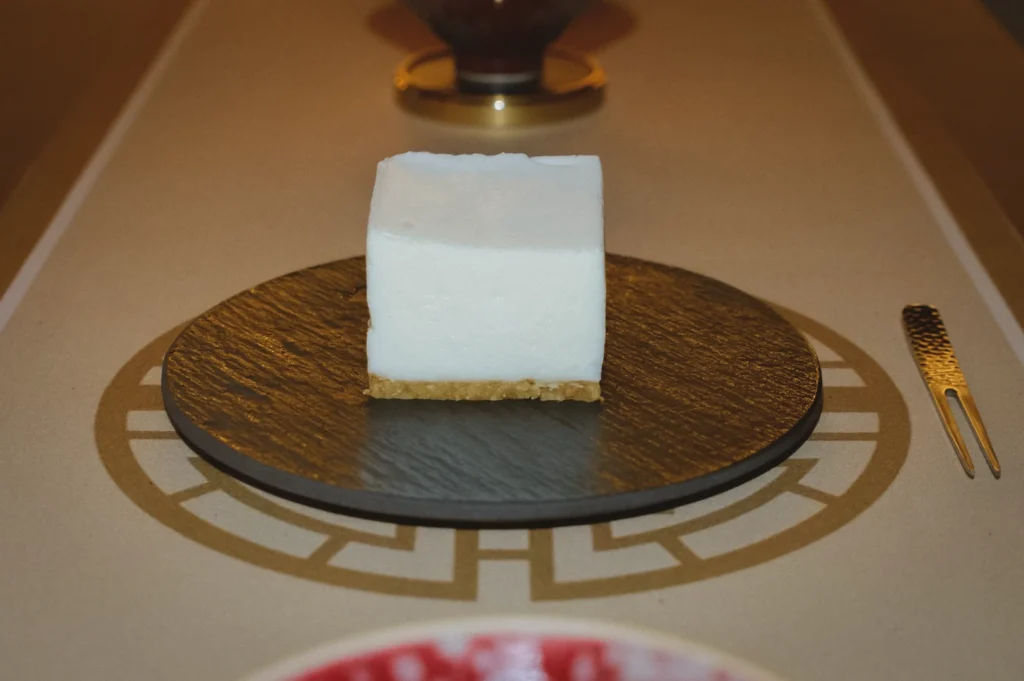
Texture is not accidental. A skilled baker does not simply pull a cheesecake when it looks done. The intended texture is decided before the bake begins, and baking time is adjusted to reach that specific outcome.
A flowing centre is not a mistake if it was intended. A fully set texture is not a flaw if the recipe was designed for it. The question is whether the texture on the fork matches the textural objective that was set at the start of the process.
This is where soy cheesecakes require particular attention. The density profile of soy differs from dairy. The water retention during baking differs. The thermal response differs. A baking time that produces the ideal texture in a conventional cream cheese cheesecake will not produce the same result in a soy-based formulation.
At Daizu by Ki-setsu, our approach to baking time is adjusted for the specific behaviour of soy at each stage of the process. We do not apply a standard formula. We work toward a textural target and adjust baking time, temperature, and cooling sequence to reach that outcome consistently. The fork is the measure we trust.