A deliberately burnt surface on a dessert can seem counterintuitive. In most culinary applications, a dark, caramelized crust signifies an error. A miscalculation of time or temperature. Yet, for the Basque cheesecake, this attribute is not a flaw. It is the defining feature, a mark of authenticity that sets it apart from all other cheesecake styles.
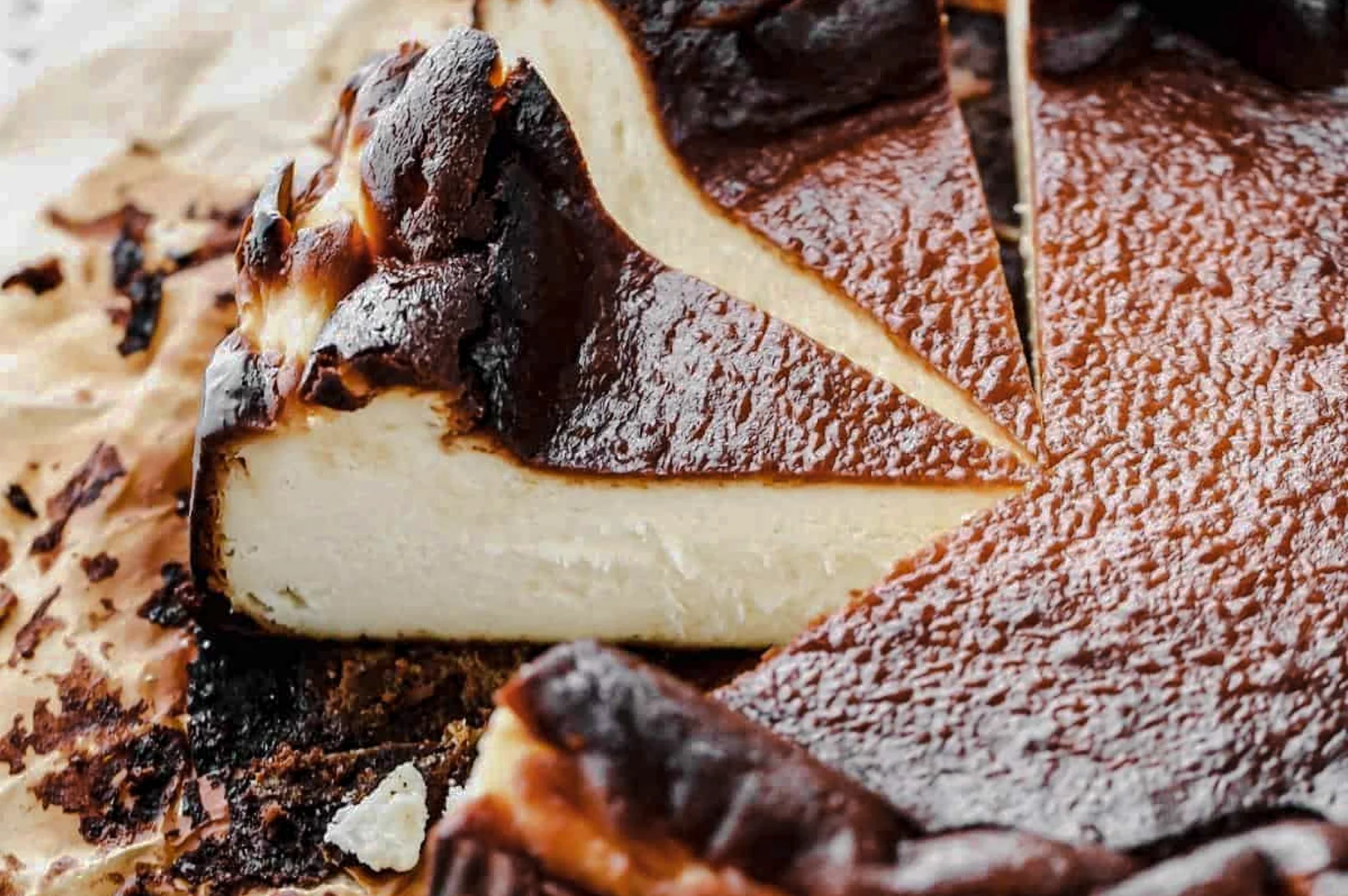
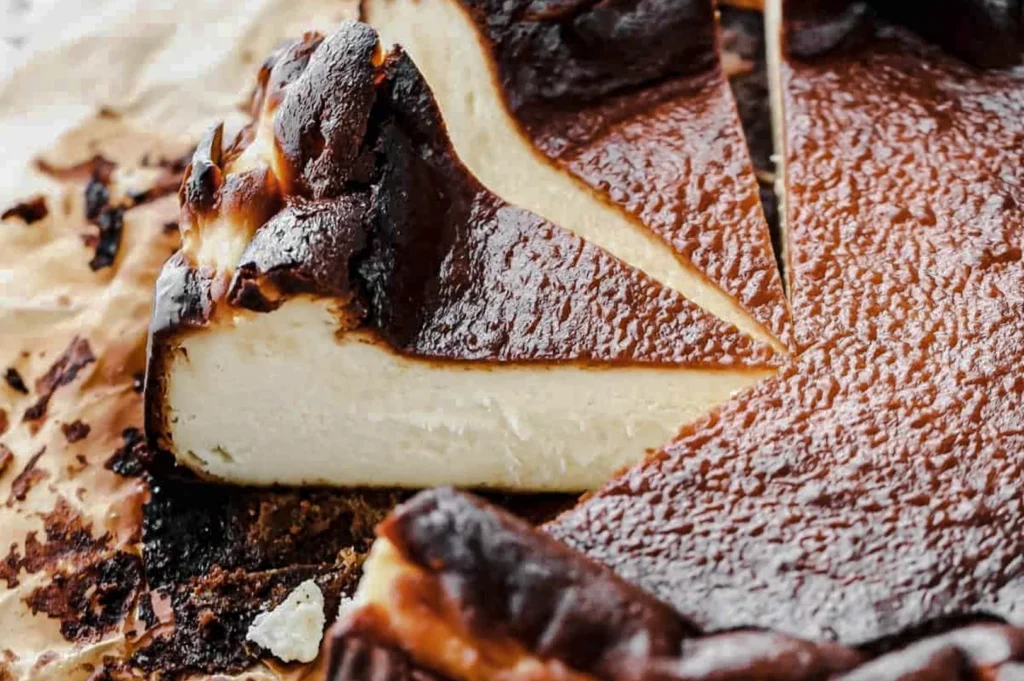
The very appearance of a Basque cheesecake challenges conventional dessert aesthetics. Where a New York cheesecake presents a smooth, pale, and unblemished top, the Basque style offers a rustic, deeply browned, and often cracked surface. This is not accidental. It is the result of a precise, high-temperature baking process designed to achieve a specific textural and flavor profile. Understanding the purpose behind this “burnt” exterior is key to appreciating the cake’s unique structure and place in the world of cheesecakes.
The Role of High Temperature in Creating the Burnt Top
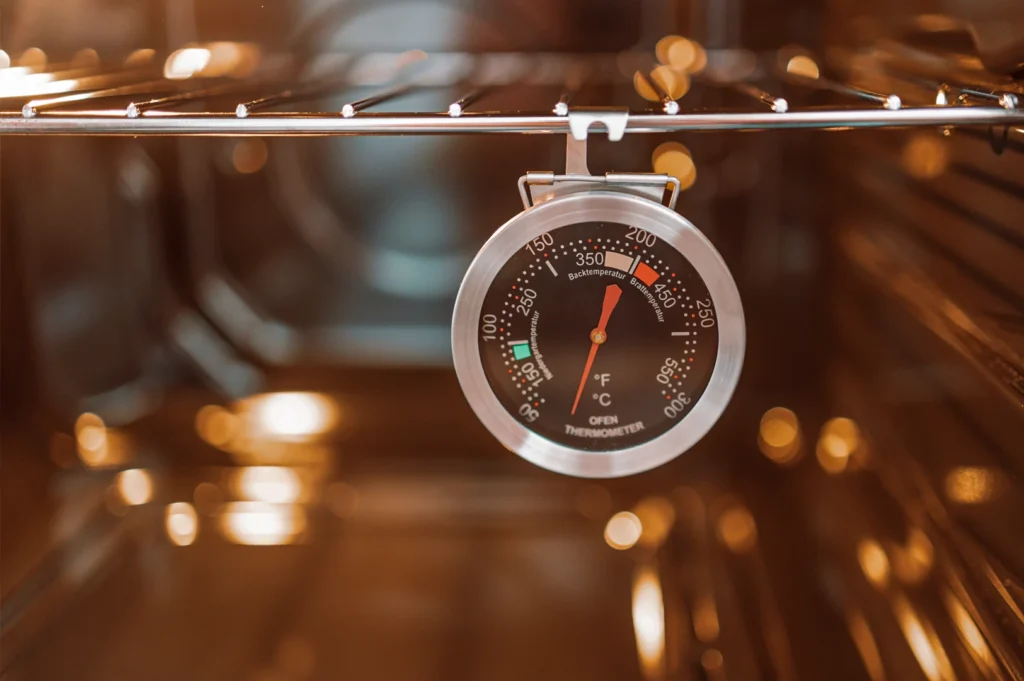
The signature characteristic of a Basque cheesecake is born from extreme heat. Ovens are typically preheated to temperatures far exceeding those used for other custards or cheesecakes, often reaching 200°C (400°F) or higher. This intense heat is applied for a relatively short duration.
This method directly contrasts with the low-and-slow approach required for a New York cheesecake, which is often baked in a water bath to ensure a gentle, even heat that prevents cracking and browning. The Basque method discards this caution entirely. The high temperature is meant to aggressively cook the exterior of the batter while the interior remains soft and under-baked.
The result is a cake of contrasts. The edges become firm and well-structured, while the center retains a dense, creamy, almost custard-like consistency. The dark top is the most visible evidence of this high-heat process.
Maillard Reaction and Caramelization: The Science of the Surface
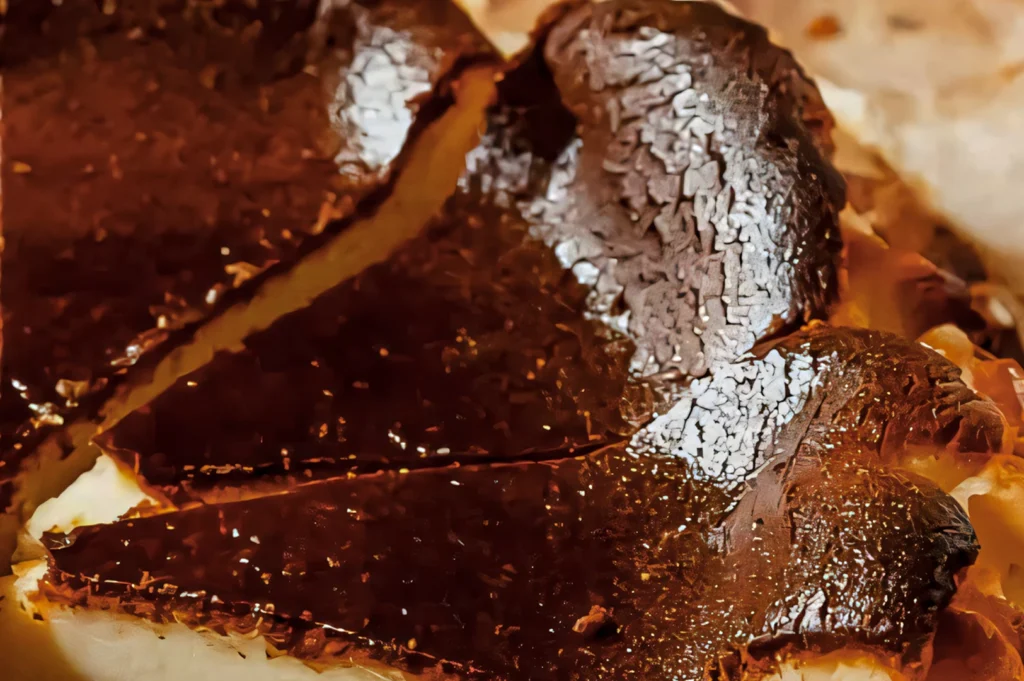
The “burnt” top is not simply burnt. It is a complex layer of flavor developed through two distinct chemical processes: the Maillard reaction and caramelization. While often discussed together, they are not the same.
The Maillard Reaction Explained
The Maillard reaction is a chemical process between amino acids (from the proteins in eggs and cheese) and reducing sugars. It is responsible for the browning and savory flavor development in many foods, from seared steak to toasted bread. In a Basque cheesecake, the high oven temperature accelerates this reaction on the surface.
This process creates hundreds of new aroma and flavor compounds. These compounds are not just sweet. They can be nutty, toasty, and even slightly savory, adding a layer of complexity that cuts through the richness of the cream cheese filling. This reaction is what separates the top from being merely “sweet” and transforms it into something more dimensional.
The Process of Caramelization
Caramelization, on the other hand, is the browning of sugar itself. It is a different process that occurs when sugars are heated to high temperatures. This breaks down the sugar molecules and forms new compounds with a distinct caramel flavor, which can range from buttery and sweet to nutty and slightly bitter.
On the surface of a Basque cheesecake, both reactions happen simultaneously. The Maillard reaction browns the proteins and sugars together, while the high concentration of sugar in the recipe begins to caramelize. The dark, almost black color is a direct result of advanced caramelization, verging on bitterness. This slight bitterness is intentional. It provides a necessary counterpoint to the sweet, rich, and tangy filling, creating a balanced finish on the palate.
How the Burnt Top Influences Texture and Mouthfeel
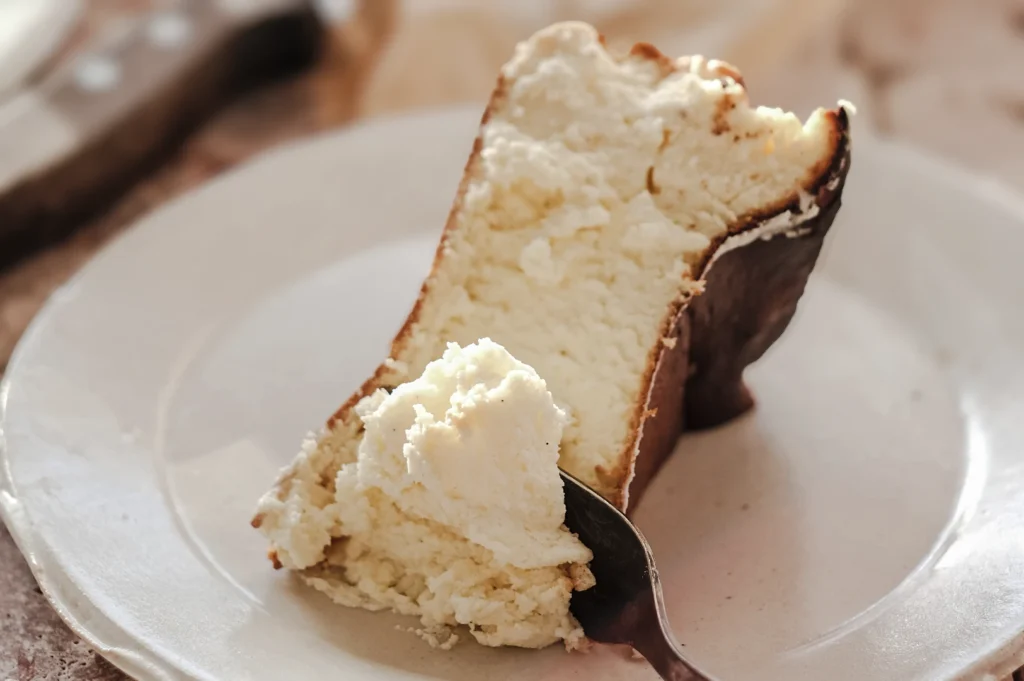
The visual drama of the burnt top is matched by its textural contribution. The high-heat baking method fundamentally alters the structure of the cake’s surface, creating a distinct mouthfeel that contrasts with the interior.
A Textural Contrast to the Creamy Interior
The primary textural role of the top is to provide contrast. The interior of a well-made Basque cheesecake is smooth, dense, and creamy. It has a significant palate weight, coating the tongue. Without a contrasting element, this richness could become monotonous.
The top layer, having been exposed to intense, direct heat, becomes chewier and more firm. It develops a “skin” that offers resistance when cut with a fork. This textural difference makes each bite more interesting. The palate first experiences the slight bitterness and firm texture of the crust before giving way to the cool, soft, and tangy custard beneath. This sequence is central to the Basque cheesecake experience.
Structural Integrity Without a Crust
Most cheesecakes rely on a separate, baked crust for structural integrity and textural contrast. The New York cheesecake has its graham cracker base. Other variations might use shortbread or cookie crusts. The Basque cheesecake is notable for its absence of a bottom crust.
Instead, the burnt top and deeply caramelized sides of the cake serve the same function. The parchment paper lining the pan is an essential tool. It allows the cheesecake to bake freely, developing its own crust on all exposed surfaces. The browned exterior forms a natural container for the soft-set interior, providing the structural integrity that a separate crust would otherwise offer. This makes the cake a self-contained entity, where the structure is an integral part of the cake itself, not an addition to it.
The Flavor Profile: Balancing Bitterness and Richness
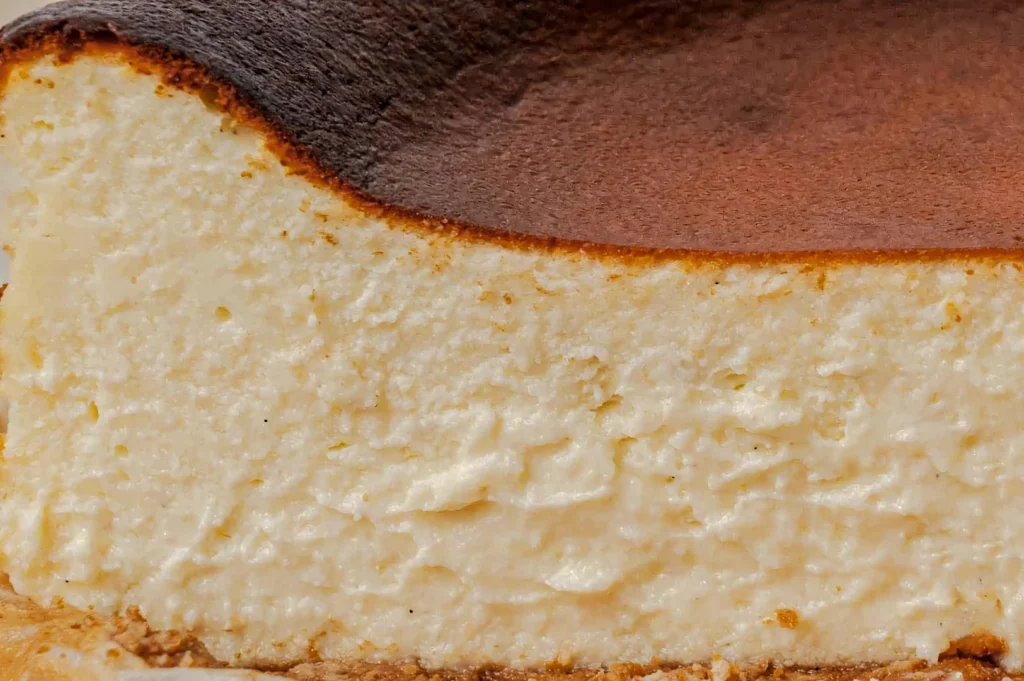
The flavor of a Basque cheesecake is a study in balance. The intentional bitterness of the caramelized top is not a defect. It is a crucial component that moderates the dessert’s overall profile.
The filling is composed of simple, rich ingredients: cream cheese, heavy cream, sugar, and eggs. This combination is naturally dense, sweet, and tangy. On its own, it could be overwhelming. The bitterness from the dark top acts as a balancing agent. It cuts through the fat and sweetness, cleansing the palate and preparing it for the next bite.
This interplay creates a more complex and mature flavor profile compared to uniformly sweet desserts. It is less about a singular note of sweetness and more about a harmony of contrasting sensations: sweet, tangy, rich, and bitter. This complexity is why the Basque cheesecake appeals to those who prefer desserts that are not one-dimensionally sweet. The composed texture and balanced finish are hallmarks of this style.
How the Basque Style Differs from Other Cheesecakes
Placing the Basque cheesecake in the broader landscape of cheesecakes helps to clarify its unique identity. Its defining characteristics stand in direct opposition to the goals of other popular styles.
The Antithesis of the New York Cheesecake
The New York style is defined by its pursuit of perfection. It aims for a dense, smooth, and even texture from edge to center. It is baked slowly at a low temperature, often in a water bath, to prevent any cracking or browning. A perfect New York cheesecake has a pale, flawless surface. The Basque cheesecake rejects this entirely. It embraces the cracks, the uneven rise and fall, and the dark, rustic top. One seeks controlled uniformity, the other celebrates rustic imperfection.
Lighter than a Traditional Baked Cheesecake, Denser than Soufflé
Compared to a Japanese soufflé cheesecake, the Basque style has a much greater density profile. The soufflé cheesecake is known for its airy, light, and cotton-soft texture, achieved by incorporating a meringue into the batter. It is exceptionally light on the palate.
The Basque cheesecake, while having a lighter and softer center than a New York cheesecake, is still fundamentally a dense dessert. Its palate weight is significant. It is structurally more aligned with traditional baked cheesecakes, but with a unique textural gradient from the firm exterior to the soft-set core.
For those who find the density profile of a traditional Basque cheesecake too heavy, other interpretations exist. The principles of a rustic top and crustless structure can be applied to different formulations. It is possible to create a version with a lighter body and a less aggressive palate weight, offering a different structural approach.
The Daizu by Ki-Setsu interpretation, for example, uses Japanese soy as a base. This results in a cheesecake that is texturally lighter and offers a cleaner finish on the palate. While not a traditional Basque cheesecake, it borrows from the philosophy of a self-crusted cake with a focus on a balanced, less overwhelming richness. It serves as a refined alternative for those seeking textural nuance without the heavy, dense character of the classic recipe. This demonstrates how the core ideas of the Basque style can be adapted to create new, distinct dessert experiences.