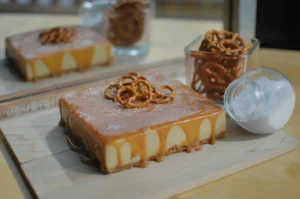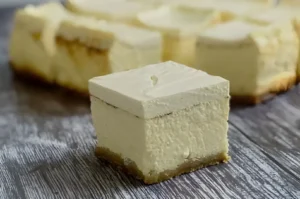
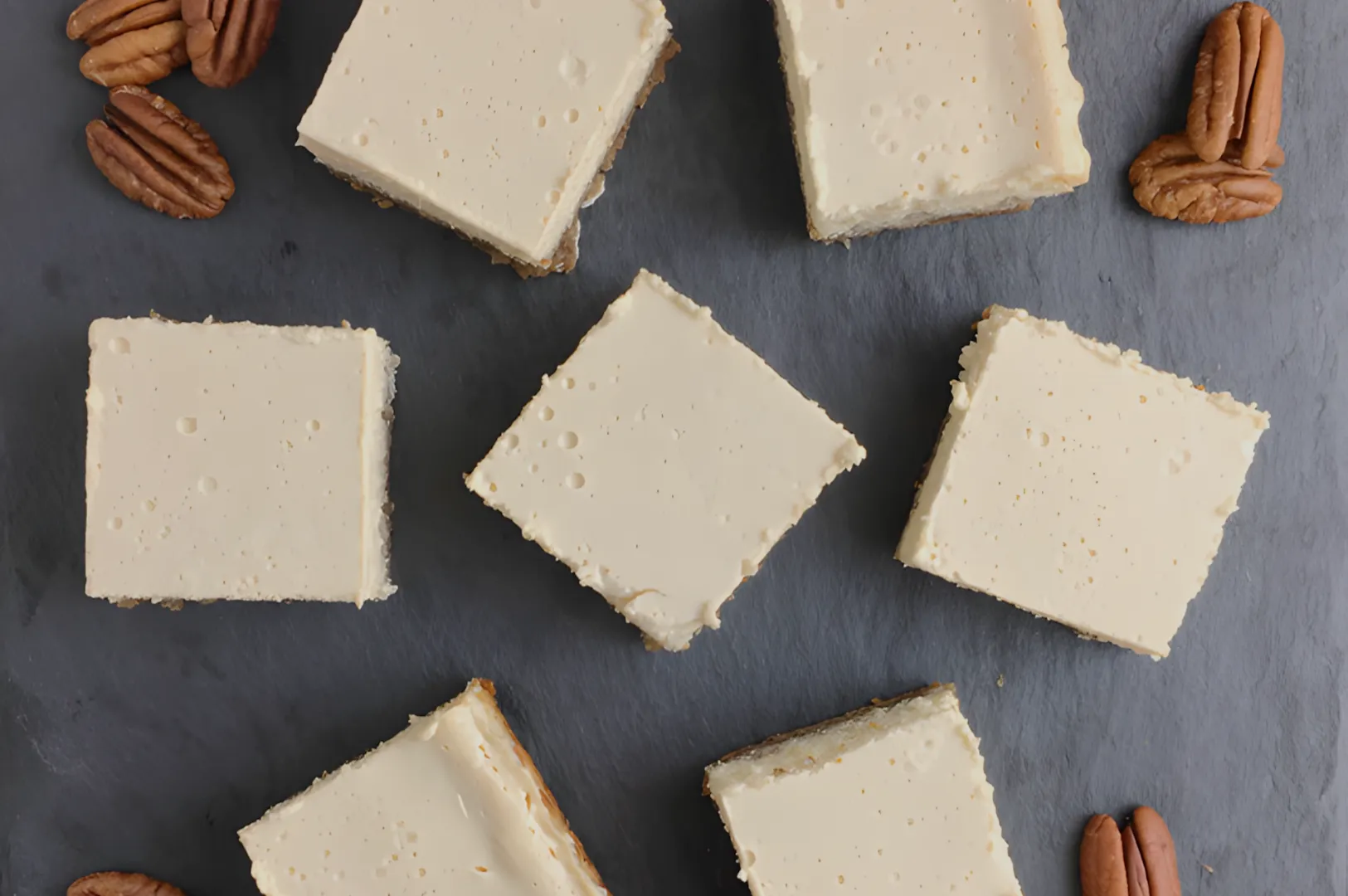
In a café’s display case, rows of identical cheesecake wedges stand perfectly uniform. Each slice reveals a smooth, balanced texture from crust to tip. While it looks effortless to the customer who just needs to decide how to buy cheesecake, achieving this consistency is a triumph of kitchen physics. It requires managing numerous variables before the cake even goes into the oven.
The process is a delicate balancing act between fat, protein, and moisture, all operating under the watchful eye of a pastry chef. When a bakery achieves consistency, it means they have mastered the invisible forces that threaten to crack, sink, or curdle a batter. It requires a deep understanding of how raw ingredients interact under heat and how environmental factors can shift the outcome of a bake.
The Invisible Battle Against High Humidity and Sticky Heat
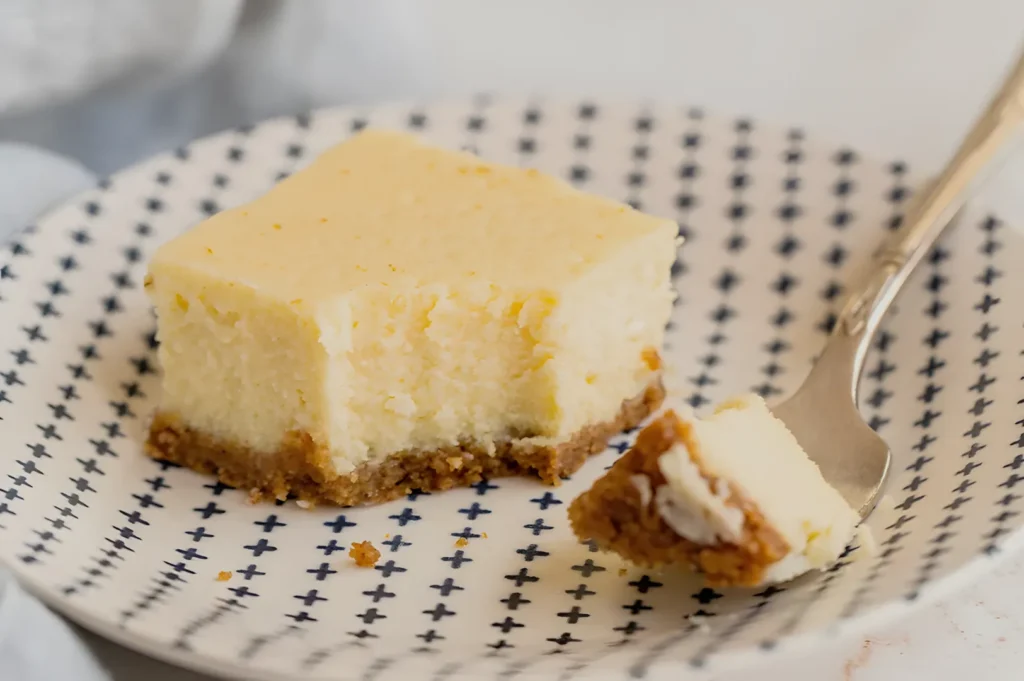
Singapore presents a unique challenge for anyone working with dairy, sugar, and eggs. The ambient air is thick with moisture, and that humidity plays havoc with the way ingredients behave when they sit on a counter. A kitchen that changes temperature every time a back door opens will struggle to produce the same cake twice.
When pure cream cheese is left out to soften, it absorbs moisture from the air around it. If the ambient humidity is fluctuating, the cheese ends up with a higher water content than the recipe intends, altering the fat-to-liquid ratio. Professional kitchens combat this by controlling the environment strictly, ensuring that the dairy remains stable from the moment the foil wrapper is removed.
A batter that absorbs too much ambient water becomes heavy and struggles to rise evenly. When it hits the oven, that extra moisture turns to steam, creating internal air pockets that cause the center to swell up and then collapse into a dense crater later. Keeping the air cool and dry is the first step toward a predictable texture.
Why a Master Baker Obsesses Over the Mixing Bowl
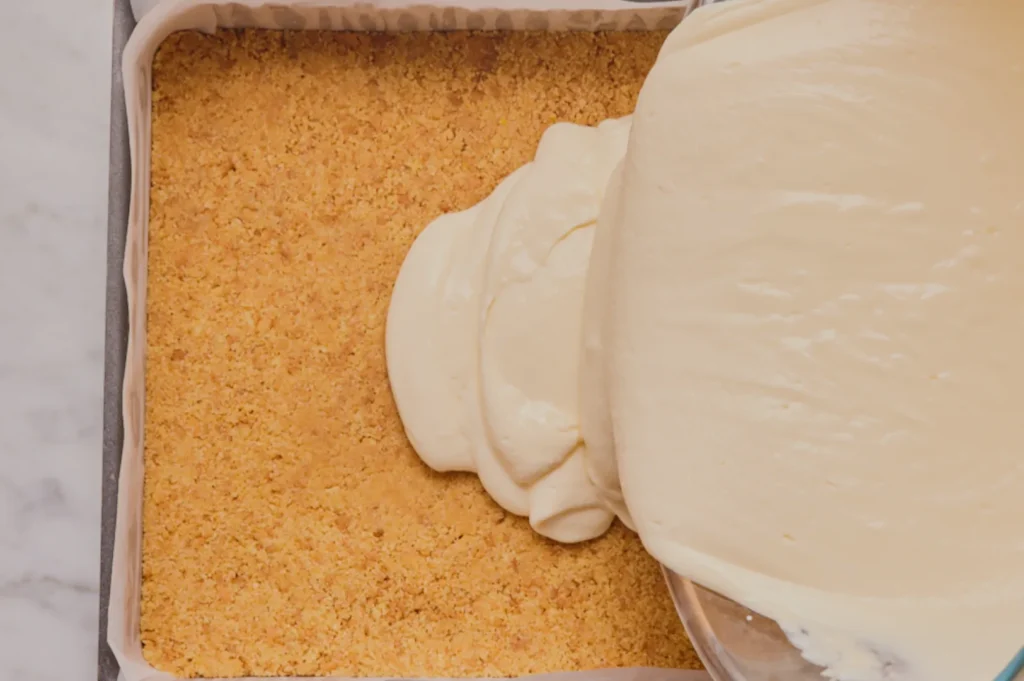
Air is the hidden enemy of a dense, velvety cheesecake texture. A kitchen worker who walks away from a stand mixer for two minutes too long can accidentally ruin an entire batch by introducing too many tiny air bubbles into the emulsion.
Avoiding the Pitfall of an Overworked Batter
When cream cheese, sugar, and eggs are combined, the goal is a smooth emulsion, not a fluffy meringue. Incorporating too much air causes the cake to expand like a soufflé during the bake, which stretches the protein structures beyond their breaking points.
Once the cake cools, those overstretched proteins cannot sustain the weight of the dairy fats. The middle sinks, leaving an unsightly wrinkle or a deep valley in the center of the cake. Professional makers use paddle attachments at low speeds, deliberately keeping the mixture dense and tight to ensure a flat, uniform surface every time.
The Science Behind a Clean Cut
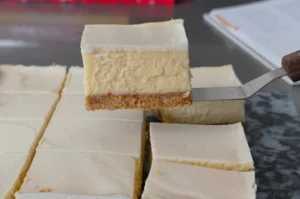
Achieving a clean release from the fork requires a perfect balance between protein coagulation and moisture retention. If the eggs cook too quickly, the proteins tighten up and squeeze out the water, resulting in a weeping cake that feels rubbery on the tongue.
The ideal texture relies on a gentle, slow cook that allows the proteins to form a soft network, trapping the fat and moisture in place. This delicate structure ensures the slice holds its shape on a plate while remaining smooth and pliable.
How Controlling Oven Heat Prevents the Dreaded Surface Crack
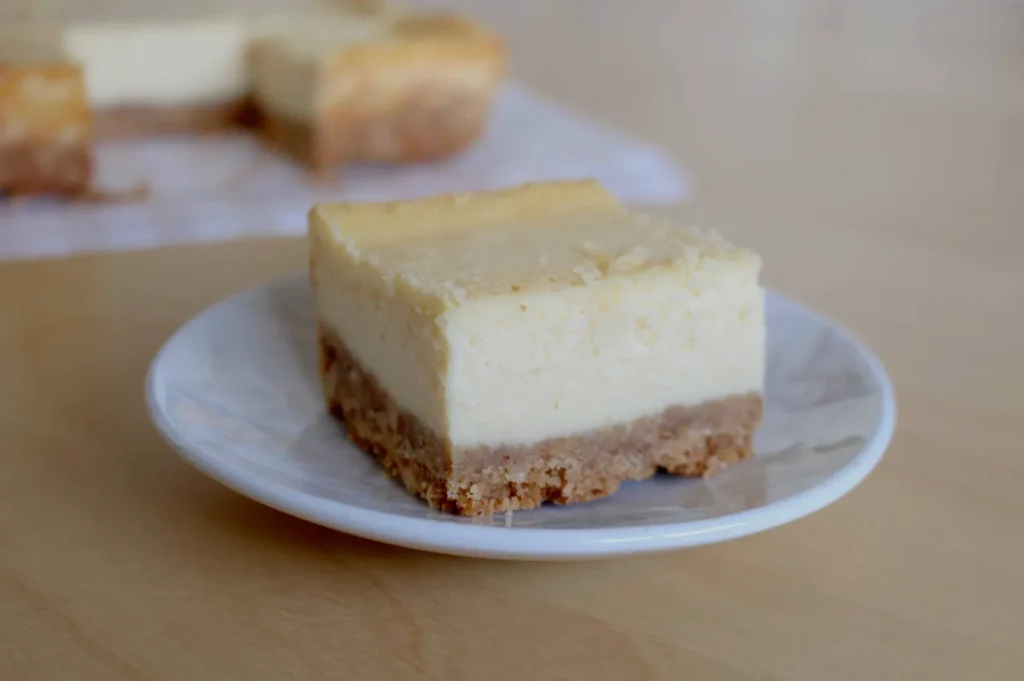
The center of a baking cheesecake is always cooler than the outer edge, creating a structural tug-of-war as the batter sets. If the perimeter cooks too quickly, it hardens into a rigid ring while the interior is still expanding, pulling the top apart and creating a jagged split down the middle.
The Gentle Insulation of a Water Bath
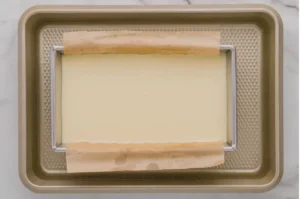
Most traditional kitchens rely on a water bath to act as a thermal buffer for the delicate batter. Since water cannot rise above boiling point, it absorbs the aggressive direct heat of the oven and distributes it evenly around the baking pan.
This moist environment keeps the surface of the cake pliable, allowing it to expand gently without tearing. It also prevents the outer edges from overcooking before the internal proteins have a chance to bond, ensuring a uniform density across the entire diameter.
Navigating the Scorched Edge of Freshly Baked Basque Cheesecakes
The rules change entirely when dealing with freshly baked basque cheesecakes, which ditch the water bath in favor of intense, direct heat. The objective here is a deliberate caramelization on top while keeping the center rich and slightly unset.
Low & Slow (Water Bath) | High Heat (Direct Roast) |
|---|---|
Even, flat surface | Scorched, dark top |
Uniform texture throughout | Molten, fluid center |
Protected from cracking | Intentional rustic collapse |
Result: Classic New York | Result: Basque Burnt Style |
To make this style consistent, bakers must calibrate their ovens to scorch the top at the exact moment the interior reaches a delicate custard state. A few degrees too low, and the cake cooks all the way through, losing its characteristic contrast. A few degrees too high, and the exterior burns before the inside can set enough to hold its shape upon cooling.
How Local Makers Deliver a Flawless Slice Every Single Time
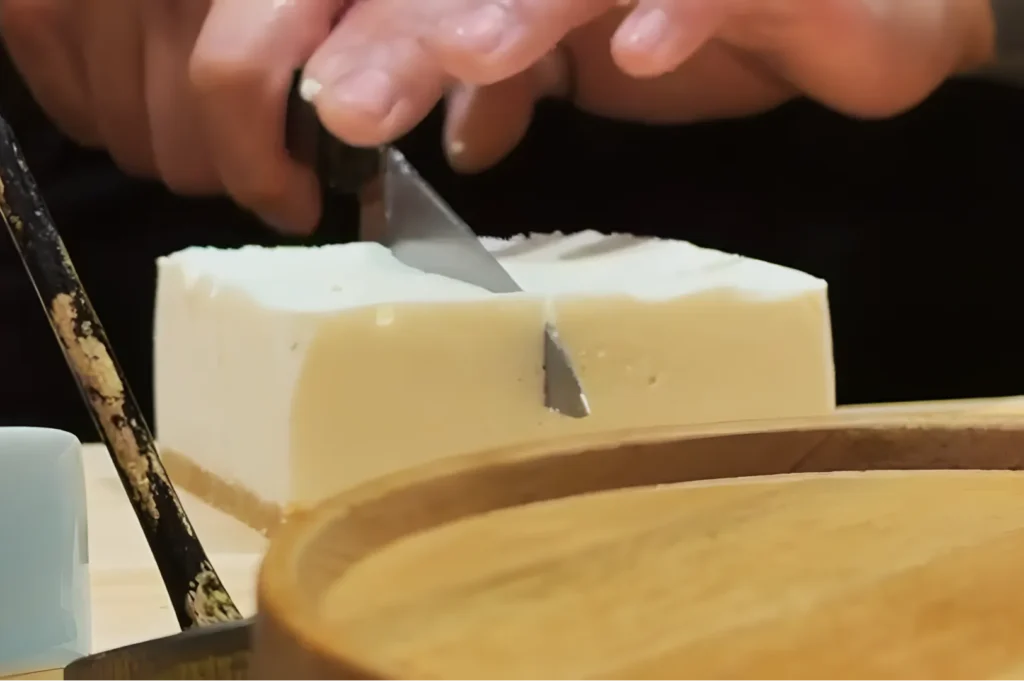
The real test of consistency happens hours after the baking timers stop buzzing. A professional kitchen thinks about the entire lifespan of the dessert, from the cooling racks to the delivery van, ensuring that the final customer experiences the exact texture intended by the recipe.
Traditional formulations often rely on heavy starches or gelatins to artificially lock the structure in place, but this can create a paste-like feel in the mouth. Modern pastry development is moving toward using functional, moisture-dense ingredients that stabilize textures naturally without relying on heavy animal fats.
At Daizu by Ki-setsu, this focus on reliable harmony defines the production of our Japanese soy cheesecakes. By blending premium soy milk and smooth silken tofu into the batter, the kitchen achieves a stable, velvety texture that remains perfectly consistent while offering a remarkably clean and refreshing finish.