Flat Top? Here’s What Your Oven Honestly Did
A perfectly flat cheesecake is rare at home, many come out domed, cracked, or sunken. The good news: getting that bakery-smooth top isn’t magic. It comes down to managing cheesecake density by controlling how heat moves through the pan and how the oven heats the batter.
When a cheesecake enters the hot chamber, a race begins between the outer edge and the center. The oven environment dictates how quickly different zones of the cake solidify, and any imbalance shows up clearly on the surface. If the heat is unmanaged, the cake will twist and warp as it cooks. Understanding the hidden mechanics of thermal transfer reveals exactly why the oven behaves the way it does.
The Physics of the Rising Perimeter
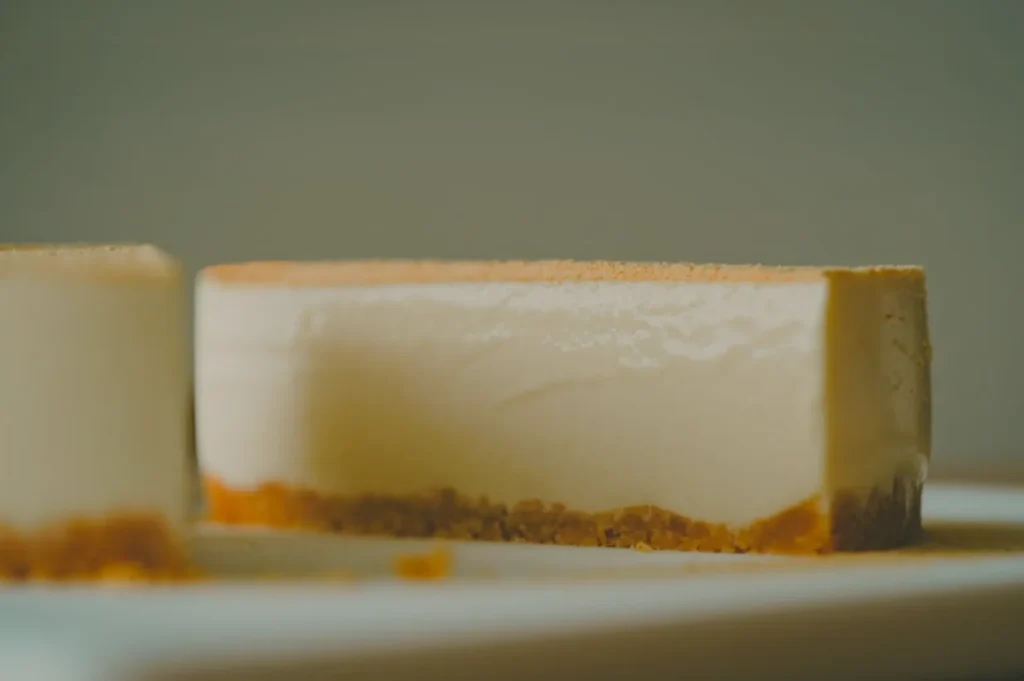
The outer rim of the batter sits directly against the hot metal pan, which transfers energy much faster than the surrounding air. This causes the eggs and cream cheese in that zone to cook, expand, and set first. As these perimeter proteins solidify, they cling to the walls of the pan and climb upward, creating a raised border.
If the oven temperature is set too high, this process happens far too quickly. The edges shoot up rapidly while the center remains cool and fluid, creating a distinct bowl shape early in the baking process. Once the outer ring sets in this elevated position, it cannot sink back down, locking the cake into an uneven structure before the interior even has a chance to warm up.
How Ambient Air Shapes the Surface
While the metal pan cooks the sides, the top of the cheesecake is at the mercy of the circulating air. Dry oven air pulls moisture away from the exposed surface, causing a skin to form over the top of the batter. This premature crust acts like a tight blanket, trapping steam underneath as the internal temperature continues to rise.
When that trapped steam expands, it pushes upward against the crust, causing the center to dome like a loaf of bread. If the air inside the oven is unevenly heated, the dome might lean to one side or crack open under the pressure. The shape of the final cake is essentially a map of how the hot air moved across the pan during the first thirty minutes of baking.
The Role of Moisture and Steam in Preventing Domed Slices
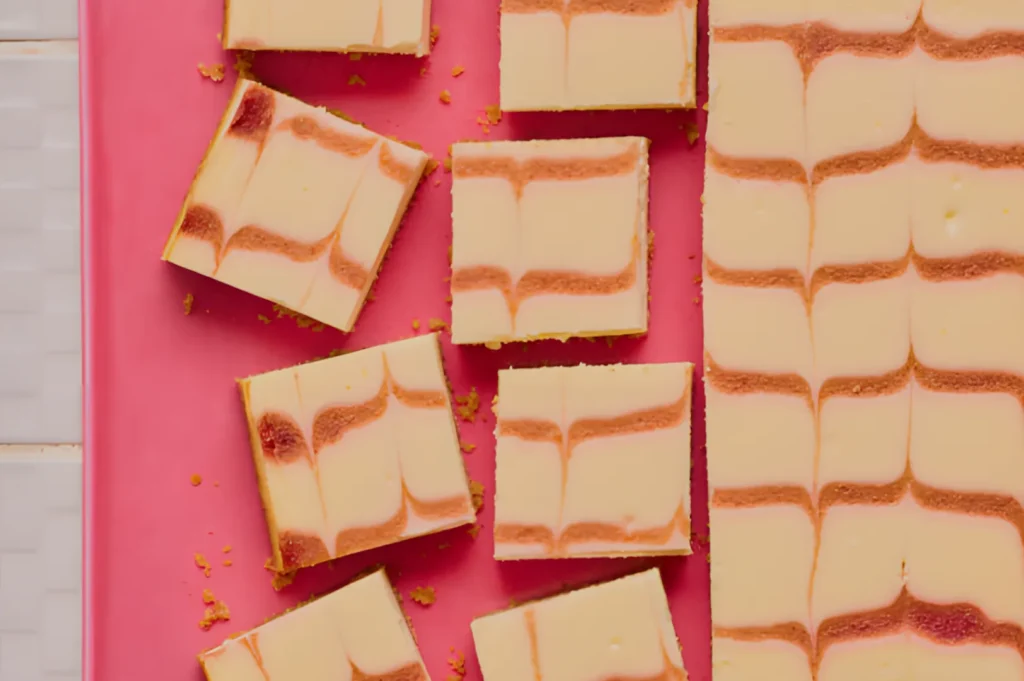
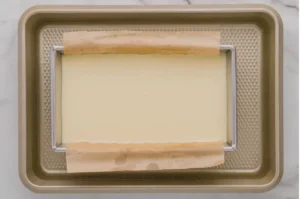
A reliable way to encourage a flat top cheesecake is to introduce moisture into the baking environment. This is why many traditional recipes call for a water bath, which involves placing the springform pan inside a larger tray filled with hot water. The presence of water completely shifts how the oven delivers heat to the delicate batter.
The liquid water acts as a natural thermostat because it cannot rise above its boiling point. This creates a protective buffer around the base and sides of the cake pan, limiting the temperature to a gentle level. Instead of the edges cooking instantly and racing up the sides of the metal, they cook at nearly the same rate as the center.
Softening the Heat Transfer
With a water bath in place, the ambient air inside the oven also becomes highly humid. This dense moisture prevents the top surface of the cheesecake from drying out and forming a premature skin. Without a tough crust holding it down, the entire batter can expand slowly and uniformly across its entire surface area.
When the cake expands as a single, cohesive unit, it avoids the dramatic stretching that leads to cracks and valleys. The slow, gentle heat allows the proteins to bond without tension, creating a stable internal network. When the heat is turned off, the cake settles back down evenly, leaving a smooth, flat top rather than a sunken center.
Why Excessive Air Appears as a Deflated Center
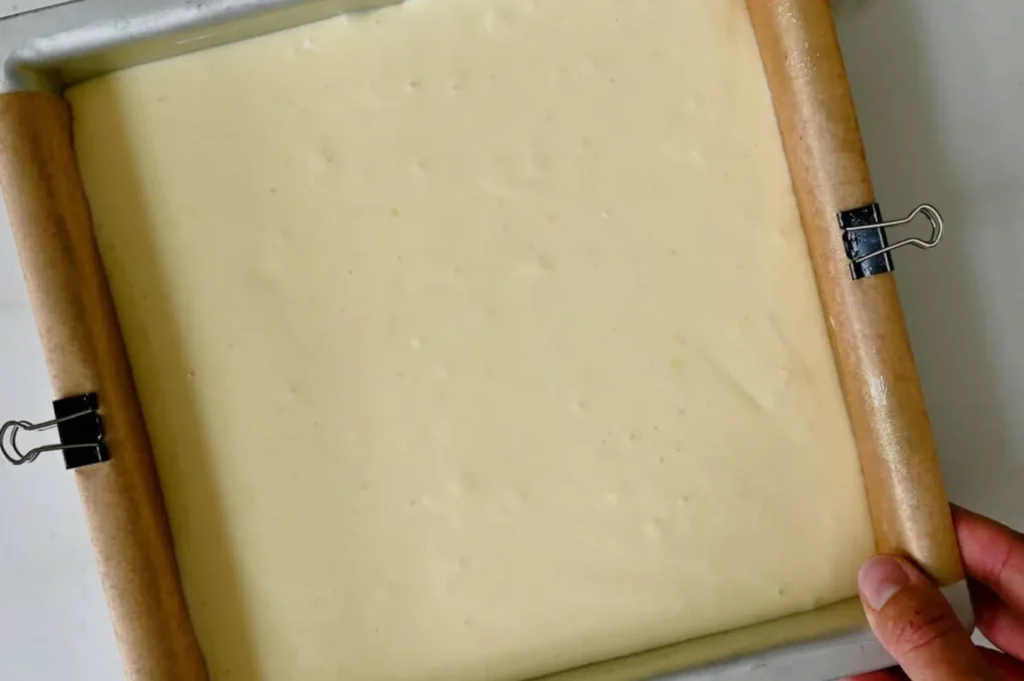
Mixing a cheesecake batter requires a delicate touch that is easy to misjudge. Whipping the ingredients at high speed feels efficient, but it introduces millions of microscopic air bubbles into the dense cream cheese base. While a fluffy batter looks impressive in the mixing bowl, it creates structural chaos once it enters the oven.
As the temperature rises, those tiny pockets of trapped air expand significantly, lifting the entire cake like a soufflé. The visual transformation can be deceiving, making the baker think the cake is rising perfectly. However, this artificial lift is incredibly fragile because the batter lacks the flour or starch matrix required to hold a tall, airy structure.
The Inevitable Collapse of Trapped Pockets
Once the cake is removed from the oven, the hot air inside those bubbles cools down and contracts. Because there is no rigid starch skeleton to support the weight, the entire structure sags under its own mass. The center, which contains the highest concentration of trapped air, suffers the most dramatic drop.
This sudden deflation turns a temporary dome into a deep crater, leaving a dense, compacted layer at the bottom and a high, dry rim around the edge. Slicing into a collapsed cake reveals an uneven texture that changes from the edge to the center. Avoiding high-speed mixing is just as crucial as regulating temperature if the goal is a perfectly level surface.
Why a Perfectly Flat Top is the Natural Result of Uniform Thermal Balance
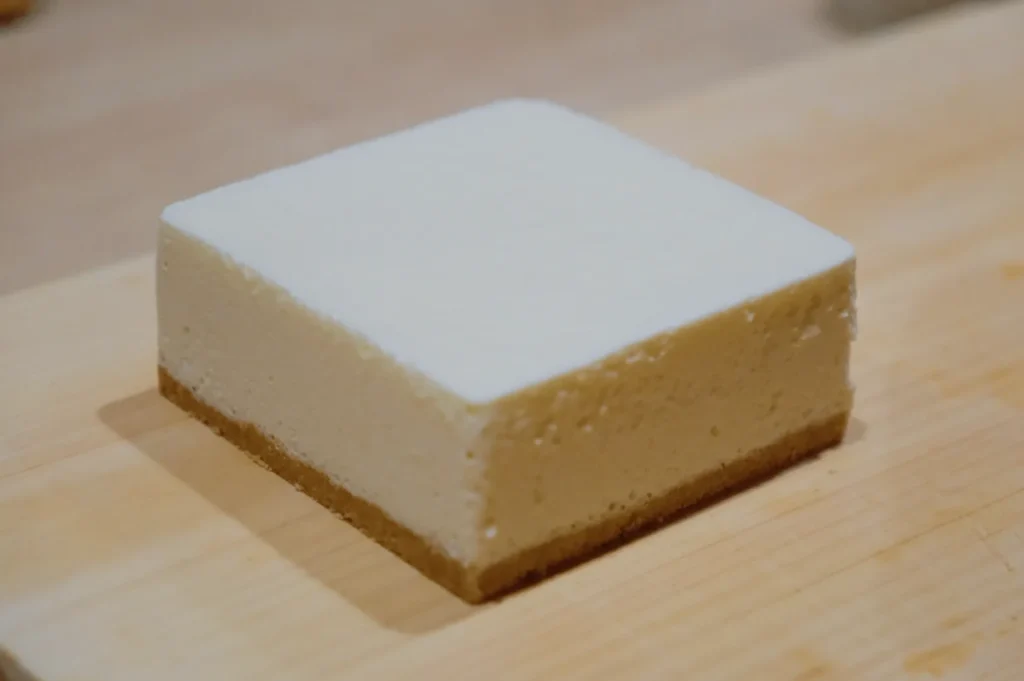
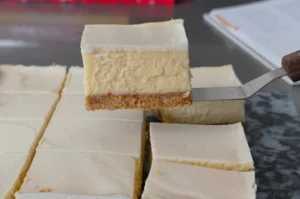
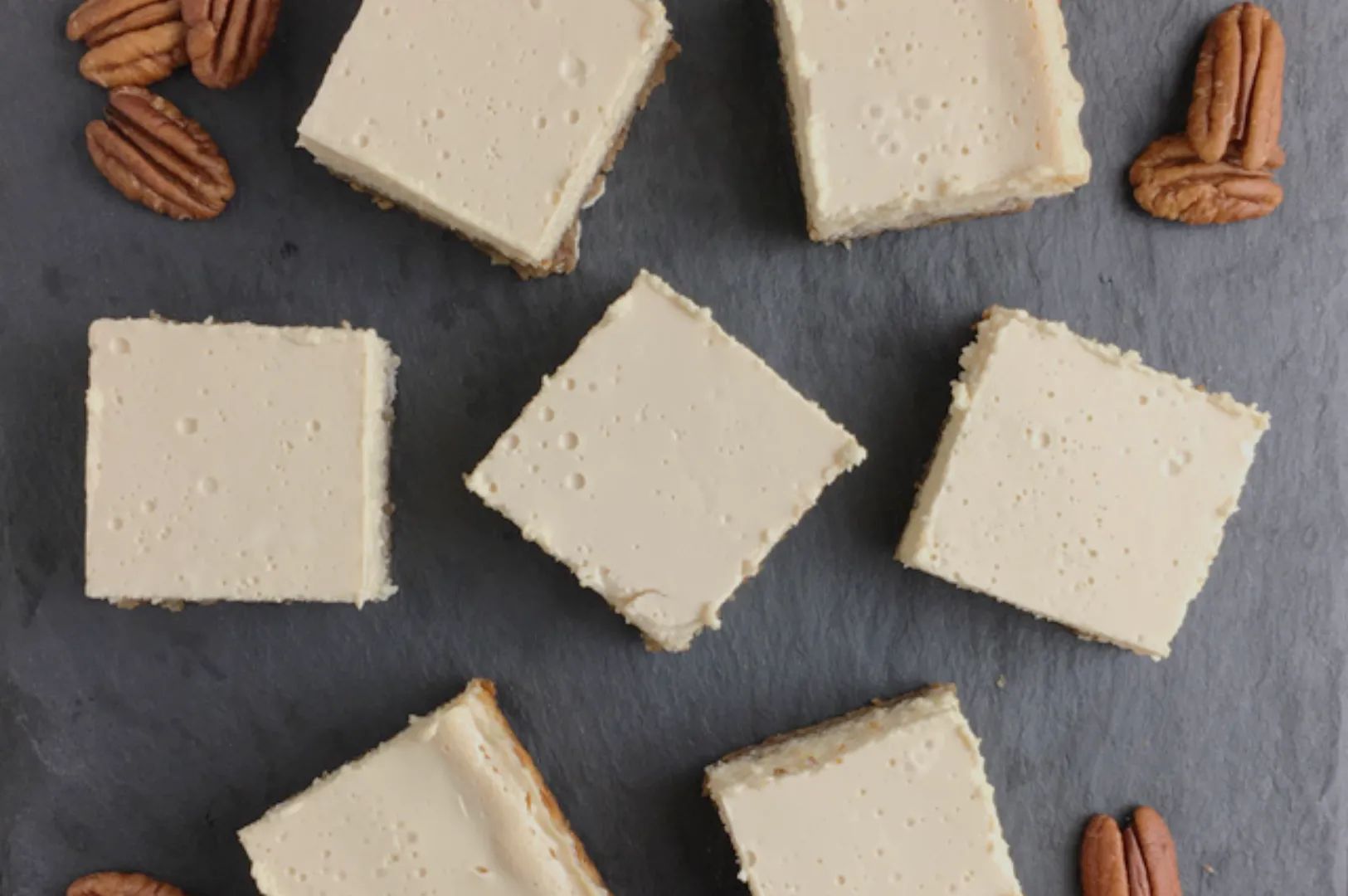
Achieving a flawless surface does not require luck, it requires an environment where heat and moisture are held in steady equilibrium. Professional kitchens achieve this by eliminating the sudden temperature spikes and dry air conditions that cause traditional bakes to warp. When every square inch of the batter cooks at the exact same speed, the cake has no reason to crack, dome, or collapse.
This focus on structural balance and reliable texture is exactly what drives modern pastry development toward smarter ingredient combinations. At Daizu by Ki-setsu, the kitchen bypasses the erratic rising and sinking common in heavy dairy formulations by mindfully blending premium soy milk and smooth silken tofu into the base. This approach creates a Japanese soy cheesecake that bakes with exceptional consistency, delivering a beautifully flat top and a clean, refreshing finish that remains perfectly stable from the oven to the table.